The brief
The practice wanted its website to explain diabetes and high blood pressure screening, answer common patient questions and make it easier to book an appointment.
Its patients read Arabic, English and French, and most of them book by message, not by form.
What we built
Three full languages, including right-to-left Arabic
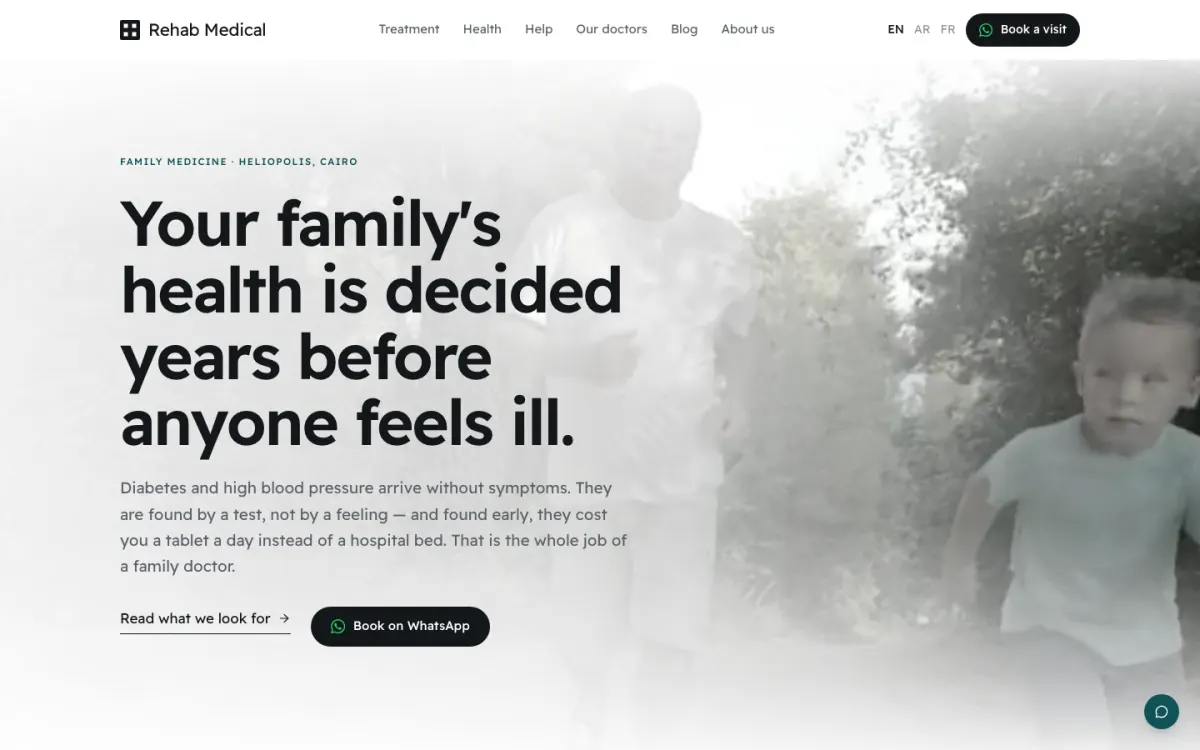
Every page exists in all three languages, with Arabic laid out right-to-left rather than mirrored as an afterthought. Patients switch language from the header and stay on the same page.
Condition pages written for a worried reader
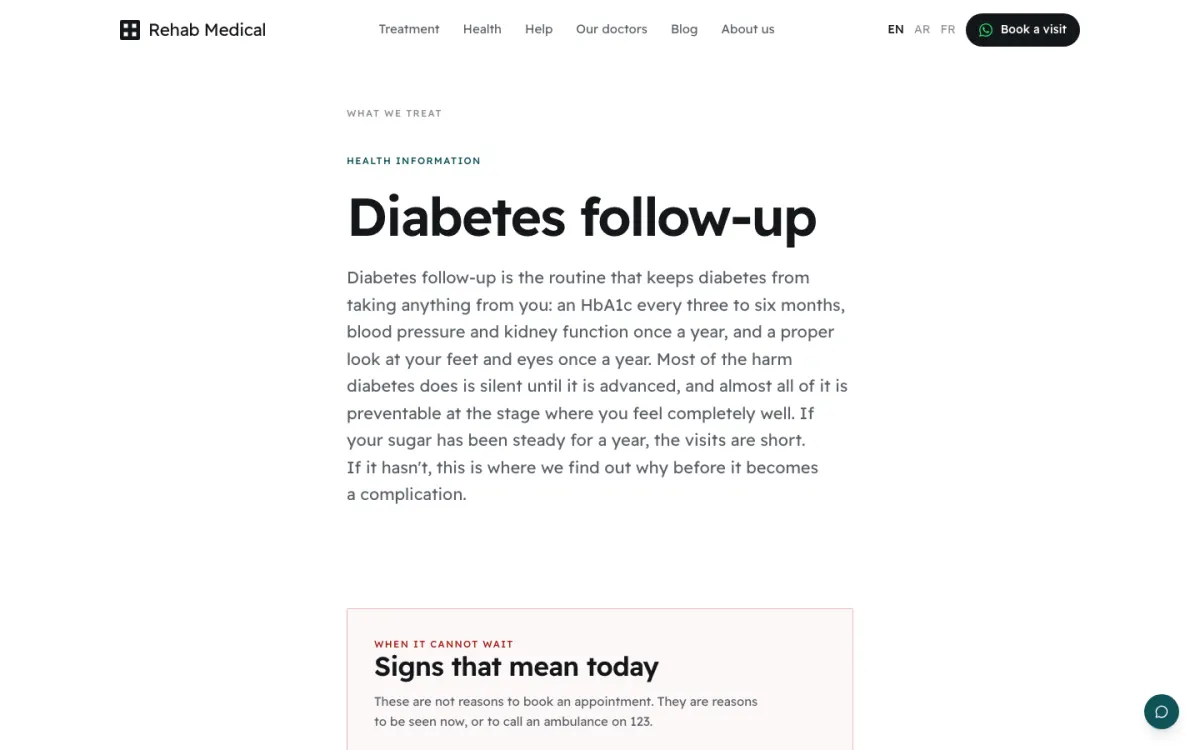
Thirteen pages, from diabetes follow-up and blood pressure to child health, women’s health and travel vaccines. Each explains what the condition is, how it is found, what a visit involves, and the signs that mean “come today” or “call an ambulance”. Written by the practice in words a non-doctor understands.
Health statistics with sources
The home page includes figures on raised blood glucose, obesity and high blood pressure in Egypt. Each figure lists its source and year, including the WHO STEPS survey, the IDF Diabetes Atlas and WHO EMRO. Charts also have table alternatives for screen readers. Where sources differ, the site explains the limits of the available data.
Booking where patients already are
A WhatsApp booking button on every page, doctor profiles so patients know who they will see, a blog for longer health guides, and a staff login for the practice to manage content.
Decisions that mattered
- Sources for health statistics. Each figure is stored and displayed with its source and year.
- WhatsApp booking. Patients can contact the practice through a channel it already uses.
- Accessible charts. Every visual has a data table, so the information is not locked in a picture.
What this means for your project: clinics, practices and service businesses in New Jersey face the same job: answer common questions in public, make booking easy, and serve patients in the languages they speak. See digital transformation and software engineering.