You see your own numbers
Students take a 30-minute Foundations Challenge in week one, which sets a measured baseline. Everything reported at the end is the change from that number, in your school, with your students.
For U.S. schools & districts
No cost, no purchase order, no multi-year commitment to sign before you have seen a single lesson taught in your own building. One class, one teacher, one semester, and a written summary at the end that includes what did not work.
Why we give it away
Any vendor can run a polished demo. What you need to know is whether your teacher can lead it, whether your students finish it, and what it does to a schedule that is already full. A semester with one real class answers all three.
Students take a 30-minute Foundations Challenge in week one, which sets a measured baseline. Everything reported at the end is the change from that number, in your school, with your students.
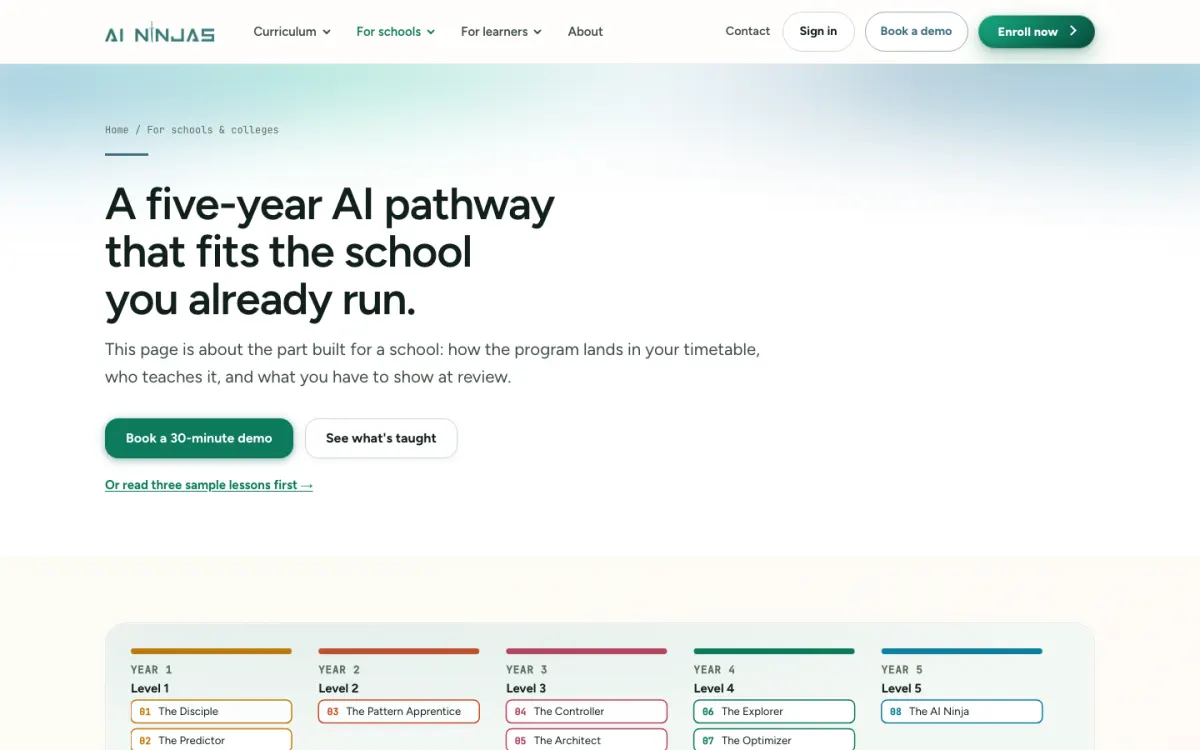
If the pilot only works because an outside expert is in the room, it will not survive a rollout. So your teacher takes the class, with the mentor guide and our support behind them.
The pilot summary is a document you can take to a department head, a principal or a board, whichever way you decide to go afterwards.
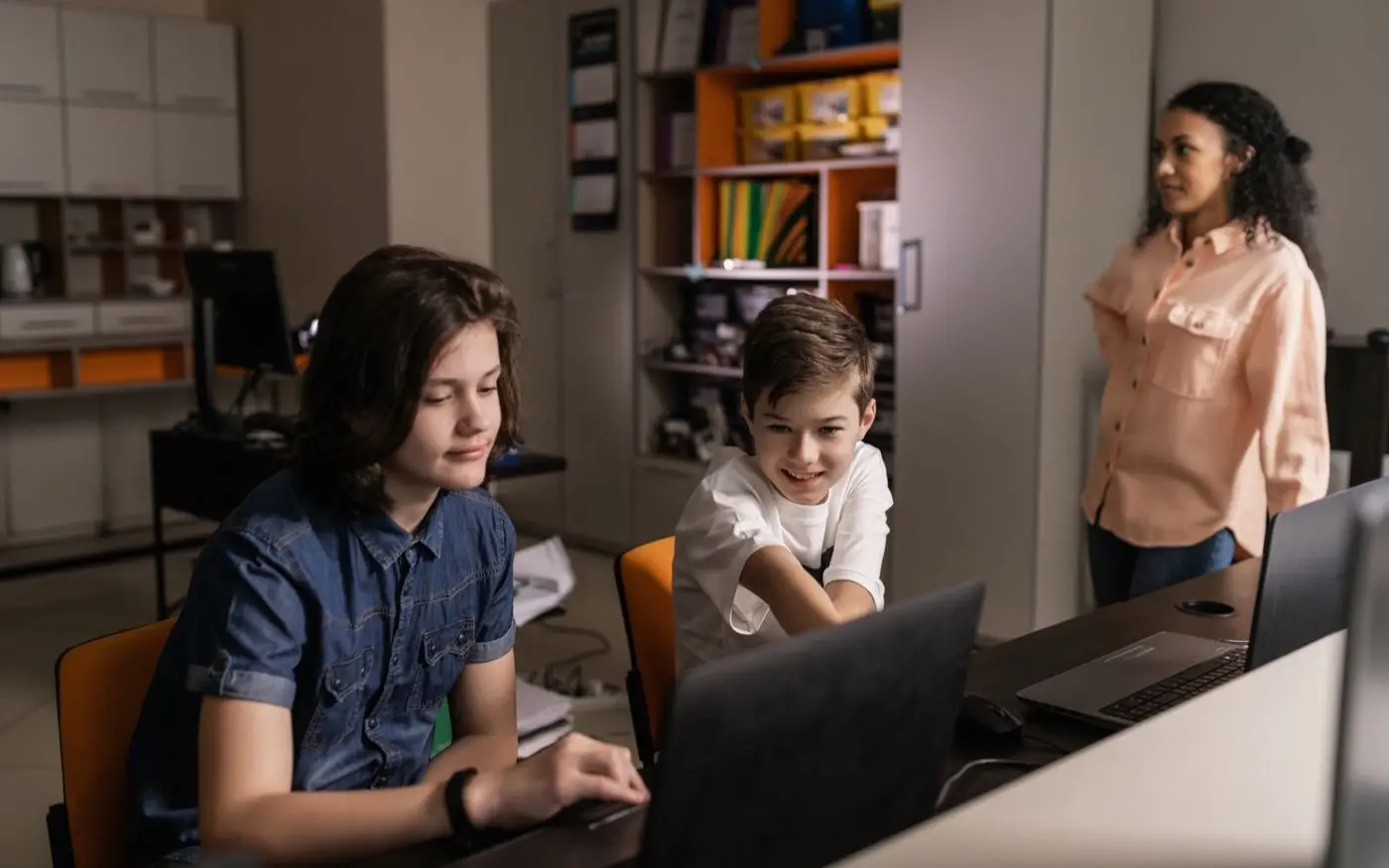
What a pilot looks like
A single period on the schedule, a teacher who volunteers, and a written summary at the end that includes the parts that did not work.
How a pilot runs
Most of that time is paperwork and setup rather than teaching. We would rather take the extra two weeks and have the data agreement signed before a single student logs in.
Which class, which teacher, which period, and what you would need to see to call the pilot a success. If the program is wrong for your school, this is where we say so.
In writing: the class, the dates, the module sequence for the semester, the success measures from step one, and what the school is and is not committing to. Nothing starts until you approve it.
Data processing agreement signed, the platform set up under your school’s branding, rosters imported and synced with Google Classroom, then a 45-minute get-started session and program onboarding with the teacher who will lead it.
The class runs. A named support team answers student coding issues within one business day. At the end you get the pilot summary, and a decision to make with real evidence in front of you.
The honest part
“Free” always has a price somewhere, so here is ours. The pilot costs the school no money and needs no purchase order. It does cost teacher time, and it needs three things from you.
And here is what we get out of it: a school that has actually run the program, and the chance to earn a license on the evidence instead of on a pitch. That is the whole trade.
What you get back
Reporting is the part schools tell us other programs leave out. These are the documents the platform produces, named for the occasion they are actually needed for.
| Report | When | Scope | Format |
|---|---|---|---|
| Pilot summary | End of the pilot | The pilot class | |
| Department review | Each term | 4 to 6 pages per class | |
| Parent-teacher conference | Per student | 1 page each | |
| Inspection & accreditation | On demand | Whole school | PDF and CSV |
The pilot summary covers baseline to outcome, completion, teacher time spent, and what did not work. We include that last section on purpose: a pilot report with no problems in it is not a report, it is a brochure.
Student data
The same terms apply during a pilot as during a paid license. Nothing is looser because it is free.
Pilot questions
The pilot ends, you get the summary, and you decide. There is no automatic rollover into a paid agreement, no card on file and no clause that turns silence into a renewal. If you decide against it, we ask you for ten minutes on why, and that is all.
A normal class. We size the pilot around the class you already schedule rather than asking you to assemble a special group, because a hand-picked set of enthusiasts would not tell either of us anything useful.
The program is for students aged 11 and up, and U.S. schools commonly start around Grade 8. For a pilot we usually suggest the grade you would roll out to first, so the result transfers. We will talk it through on the call.
Yes, and the structure is the same: one class per school rather than one school doing everything. It gives a district a comparison across buildings, and it keeps the teacher-time cost small in each one.
Yes. Everything in the program runs online, so we work with schools anywhere in the United States and Canada. If you would rather have the teacher training run in your building, we travel for that as well.
Next step
Thirty minutes. We will walk through a real lesson and the mentor guide, answer the data questions, and send the written proposal afterwards. A reply within one business day.