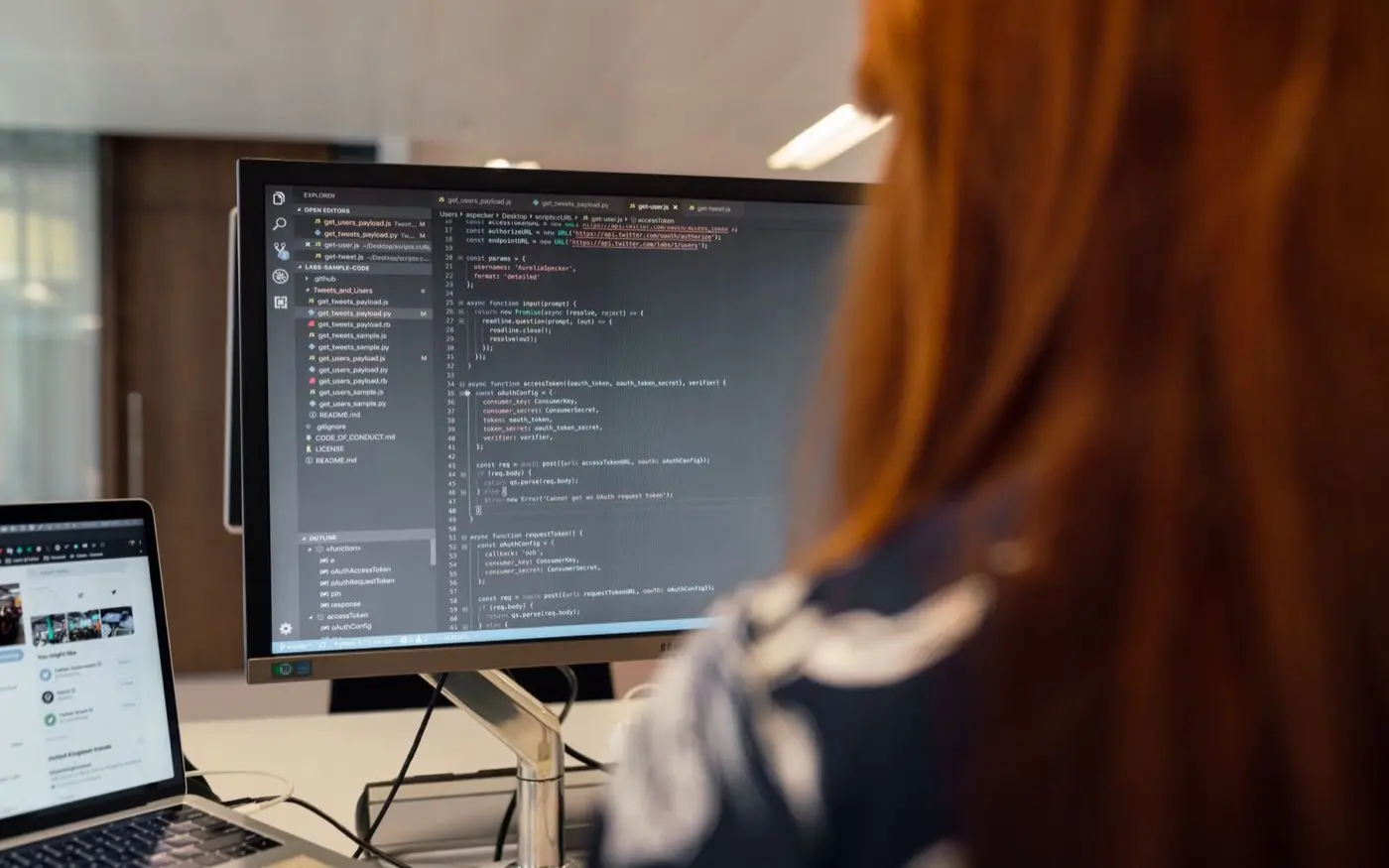
You write the code
Complete 54 guided labs and pass a working-code check at the end of each module.
For students, parents & professionals
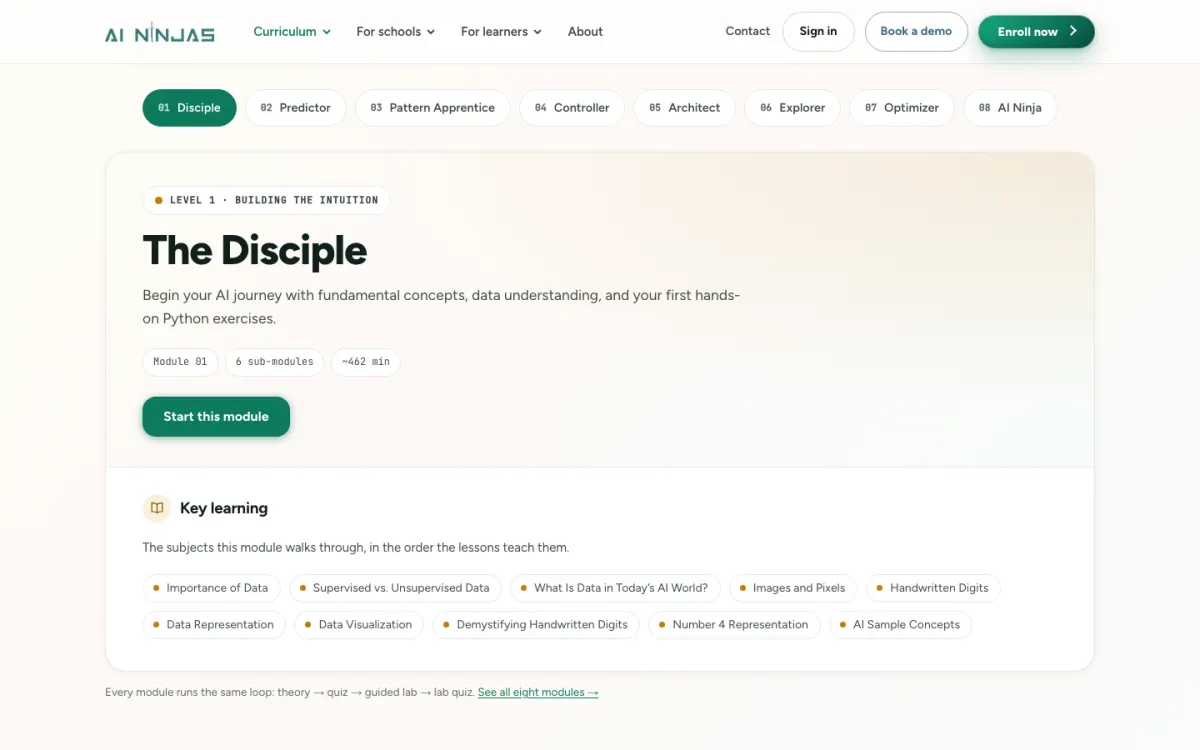
Eight modules, self-paced, in lessons of two to seven minutes. You write Python in the first one and finish having built and tuned a neural network you can explain. The same program U.S. schools teach, open to anyone aged 11 and up.
Why this one
Learn how models are built and trained, then practice applying those ideas in code. The course assumes no prior programming experience.
Complete 54 guided labs and pass a working-code check at the end of each module.
Built on spaced repetition, so a lesson fits a commute or a lunch break. Self-paced, no fixed dates, pause when life happens, and nothing expires.
Earn five level certificates and eight module badges. Each credential can be verified online and includes the assessed work.
Learning on your own
Lessons run two to seven minutes and end in something that runs. Five credentials, nothing expires, and you can stop and come back without losing your place.
Who takes it
Everyone follows the same eight modules to the same standard. What differs is the pace and what you are trying to get out of the other end.
For learners aged 11 and up, with no coding assumed. School students often complete about two modules a year and build a neural network as their skills develop.
You can be added as a guardian on the account and follow one progress record: the baseline, each module check, each graded project. No advertising to children, and data you can ask to see, correct or delete at any time.
Developers, analysts, engineers and technical managers can use the Foundations Challenge to check their starting level, then work through the course and build a model. Ask us for an employer-funding summary.
How it actually goes
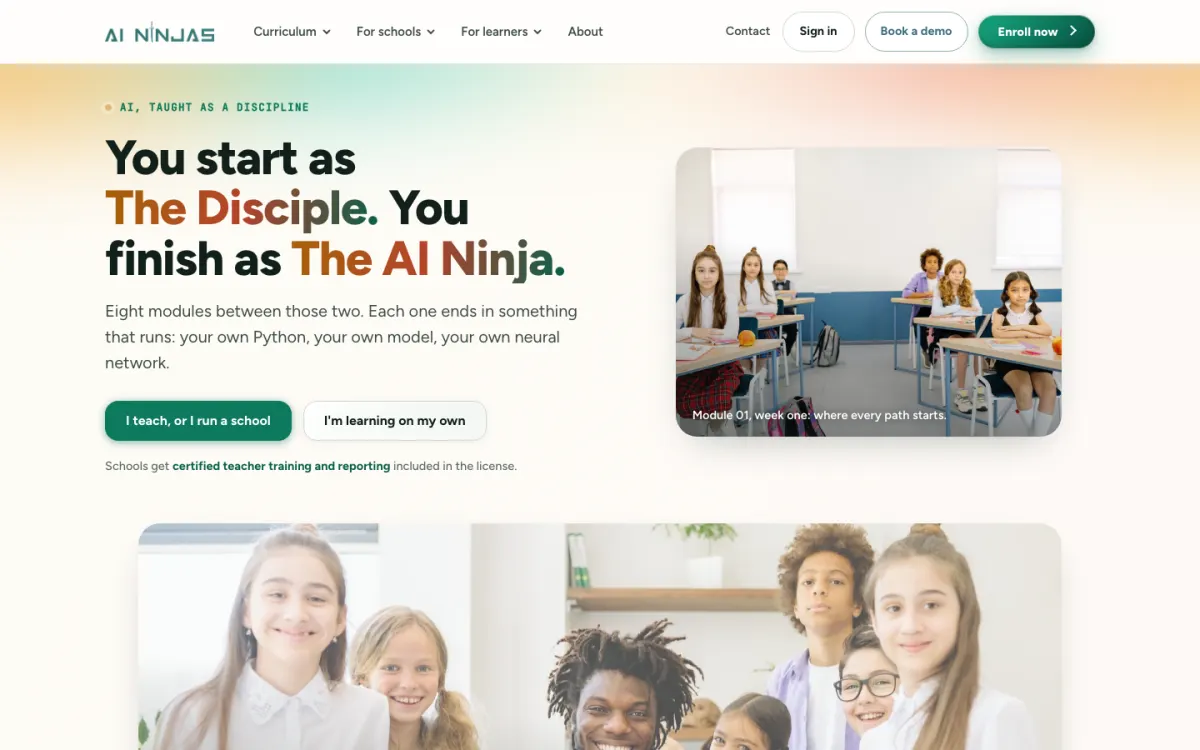
There is no application and no interview. You start by finding out where you actually are, then work module by module.
What the course can promise
College admissions decisions depend on many factors, and each institution evaluates applicants differently. Completing this course does not guarantee an advantage in admissions.
Students finish with a neural network they built, assessed project work and a verifiable credential. They can use these to explain what they learned in applications, interviews or conversations about their interests.
Before you enroll
No. Module one starts with your first line of Python. No coding or machine learning is assumed, and the Foundations Challenge sets your starting point so you are not sitting through things you already know.
Eight modules, at your own pace. School students usually spread it over their school years at two modules a year. An adult alongside a job tends to move much faster. Nothing expires, so pausing costs you nothing but time.
You pay on the AI Ninjas platform, which carries the current price and terms for a single learner. If your employer might fund it, ask us for a summary written for a manager rather than for a learner.
Yes, the same eight modules and the same mastery standard. A school cohort gets a trained teacher in the room and the school gets reporting; a self-paced learner gets the community and the demo walkthroughs instead. The credential means the same thing either way.
Yes, and many do before proposing it to their school. If you then want to run it with a class, your school can start a free one-class pilot and you would get the teacher onboarding as part of it.
Only what the program needs is collected, it is never sold and children are never advertised to. The platform is designed against IEEE 2089-2021, the age-appropriate design standard for children’s services. You can ask to see, correct or delete a record at any time. The full policy is published.
Start
Find out where you actually are, then take module one. If you are choosing for a child, or for a classroom, we are happy to talk it through first.