The problem
Choosing a driving instructor usually means a name from a friend or a directory listing with a phone number and little else. Learners cannot compare what matters (the car they will learn in, manual or automatic, what an hour costs, what other learners said) until they have already called around. Good instructors, meanwhile, spend time on calls with people who were never a fit.
What we built
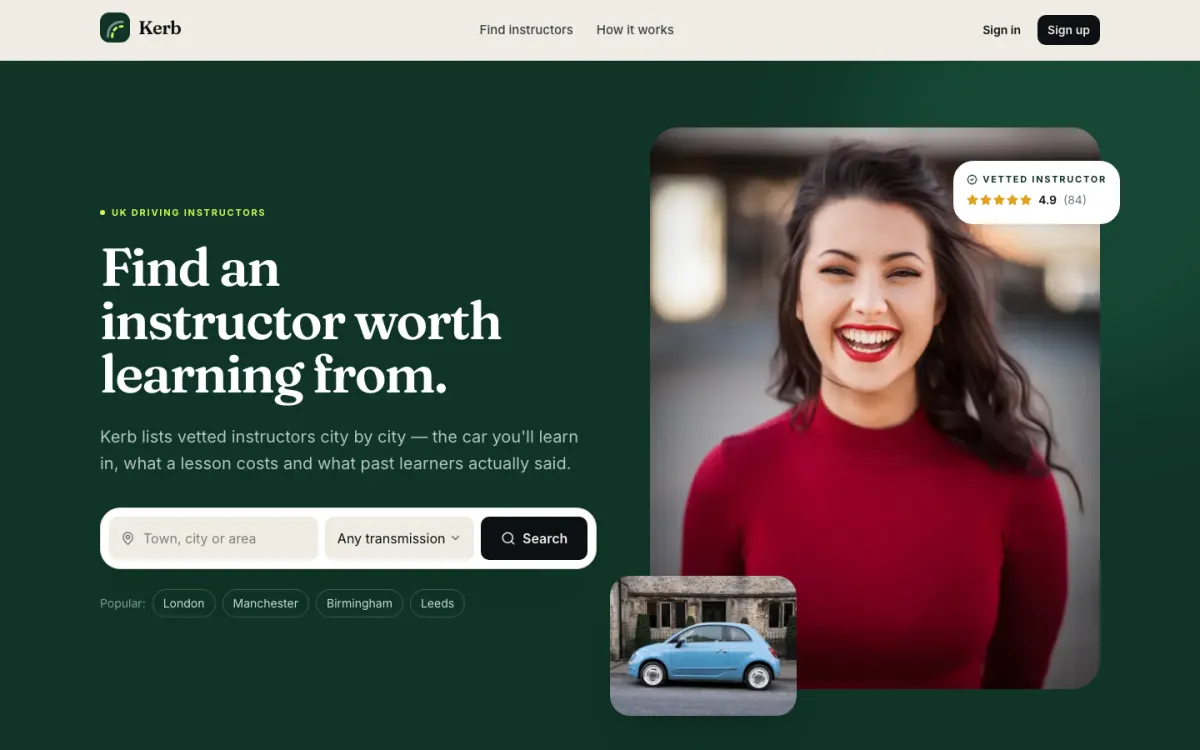
Search that starts where the learner lives
Learners search by town, city or area, filter by transmission, sort by rating or price, or use their exact location. Results only include instructors who actually teach in that area, with price per hour, years of experience, the car, and rating shown on the card. Each city has its own page (“driving instructors in Leeds”), so the marketplace can be found the way people search for it.
Profiles that answer the questions before the call
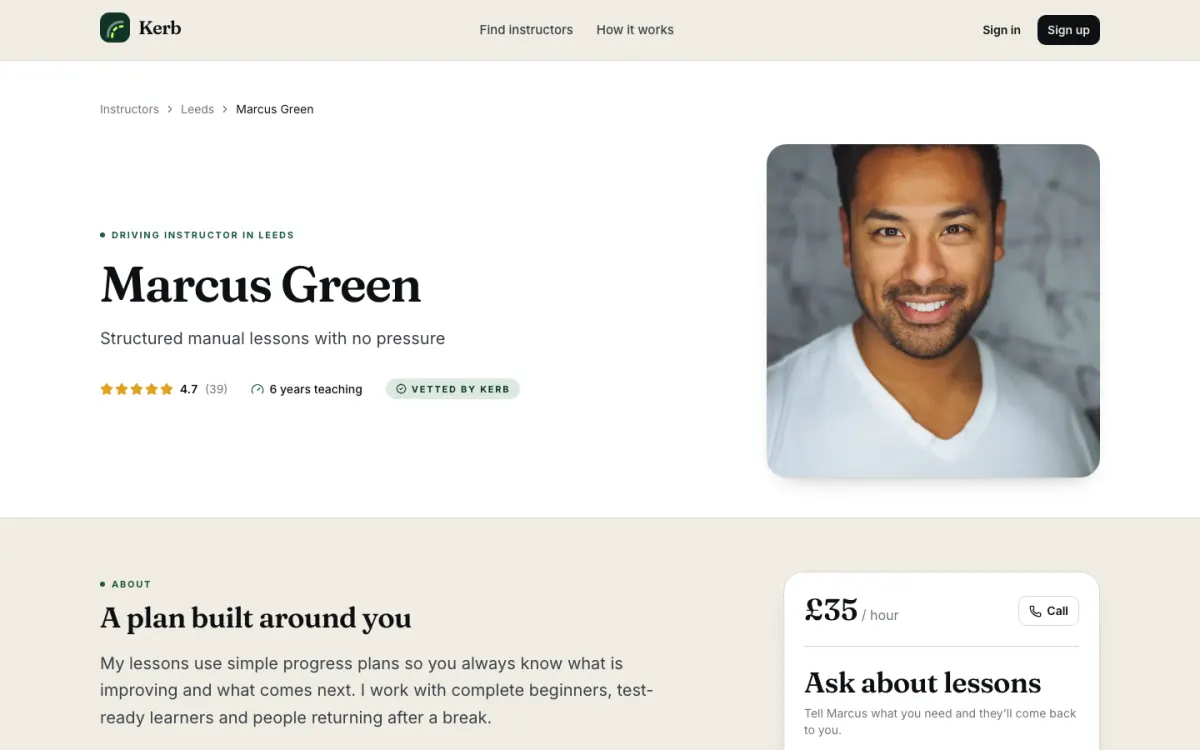
Every instructor profile shows their approach in their own words, the areas they cover, the car (make, model, color, transmission, dual controls), their hourly price and their reviews. A short inquiry form sits beside it: name, contact details, postcode, preferred contact method and what the learner needs help with. It goes straight to the instructor, with no booking fee and no call center in between.
Vetting before anyone goes live
Instructors apply, and every profile is reviewed before it is published. Each listing moves through draft, pending, active and suspended, so the marketplace can remove an instructor quickly if something goes wrong. Verified instructors carry a badge learners can see.
A portal that turns inquiries into a pipeline
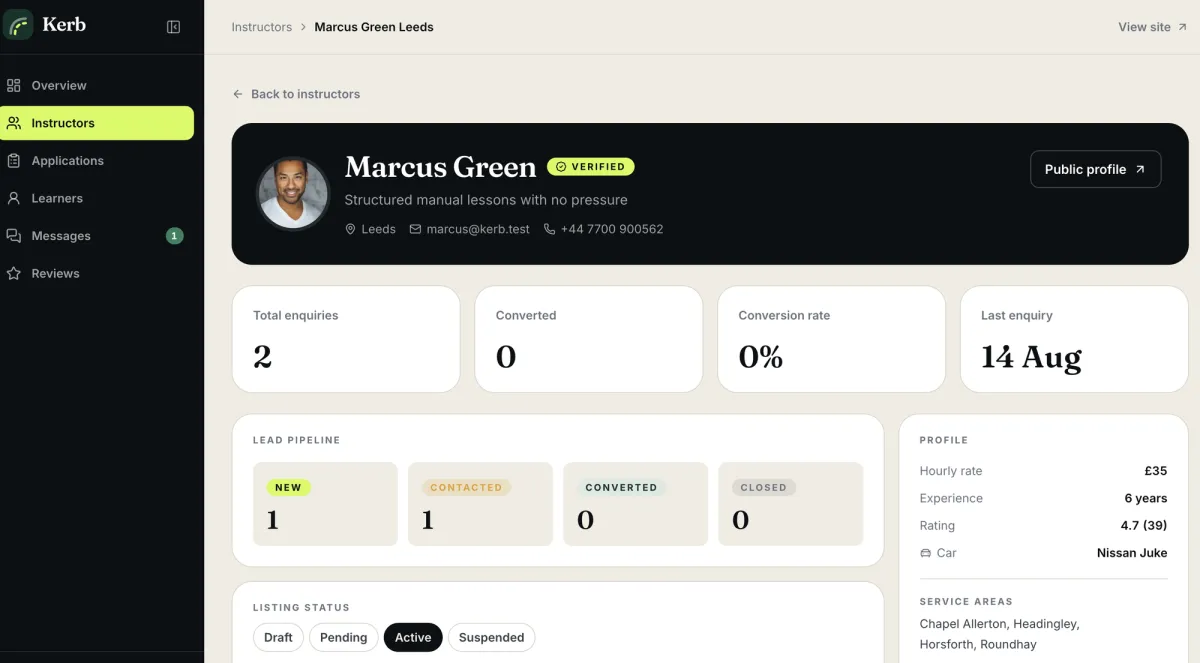
For instructors and the operator, every inquiry becomes a lead with a status (new, contacted, converted, closed), and the portal shows total inquiries, conversions, conversion rate and the date of the last inquiry. Messages, learner records and review moderation sit in the same place.
Decisions that mattered
- No booking fees. Learners contact instructors directly and pay nothing extra; instructors keep their whole lesson fee.
- Vet first, list second. In a market built on trust, an unchecked listing does more harm than a missing one.
- Compare on substance. The car, the transmission and the price are on every card, because those are what learners call to ask about.
- Inquiries that are useful. The form asks what an instructor would ask on the first call, so the first reply can be an answer.
What this means for your business: the same pattern (local search, vetted profiles, direct inquiries and a lead pipeline) fits any local service marketplace: tutors, home services, health practitioners, trades. If you have a network of providers and customers who struggle to choose between them, see software & product engineering.